
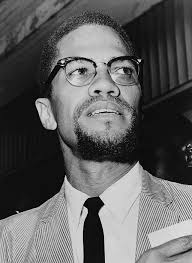
“You don’t scare Negroes today with no badge or no white skin or no white sheet or no white anything else” says Malcolm X who demonstrates “Democracy is Hypocrisy”(Vol 16). Malcolm X delivered this speech was the decade of the civil rights movement in the 60’s which held the frontiers of injustice for the Black community. This was the era where tension was high between White and Black communities of the United States. The Civil Rights era was the period of peaceful and violent protests against white police violence and brutality towards Blacks in America. A period when Whites and Blacks lived separately while Blacks fought to win their freedom by any means. Malcolm X effectively educated his audience of the blockage of Black freedoms and liberties by exposing the hypocrisy of the government in which his people lived in. Malcolm X’s passionate speech Democracy Is Hypocrisy presents exceptional points on injustice, police brutality, and racism towards Blacks through evidential and persuasive credentials showing how American democracy simply covered up problems.
“Malcolm X was an African-American Muslim leader and black nationalist activist whose militant advocacy of black pride, separatism, and armed self-defense foreshadowed the Black Power movement of the late 1960s” (Contemporary). In 1946, Malcolm took on the Muslamic fate while in prison to transform himself from a criminal as a stealer to a Black activist “questioning ‘civil rights’” because of his belief, protest against white supremacy and he was later labeled a traitor (Petin). “Malcolm X advocated black separatism, and he advised blacks to take up arms in self-defense against white hostility” which was the motive for his speech (Contemporary). Malcolm’s speech was about hypocrisy in the democratic government. Hypocrisy is claiming to have a standard but the standard is not held in the actions. The purpose for Malcolm’s speech of this ideas was caused by the “major thrust for racial integration” and Malcolm was pursuing racial separation do to his belief that civil rights in America was only “tokenism” (Encyclopedia). In other words, the practice of making only a symbolic effort to do a particular thing, especially by recruiting a small number of people from underrepresented groups in order to give the appearance of sexual or racial equality within a workforce. Malcolm’s combat tactic of Black separatism by fighting for Black freedom brought hatred from Black and White communities because both were concerned about a race war due to his tirades against “white devils” which labeled him “dangerous” (Contemporary). After Malcolm’s release from prison he became apart of the Nation of Islam and later split form it to “form his own more politically active group” creating the Organization of Afro-American Unity (Vol 16). He began to speak more about the Civil Rights Movement because Elijah Muhammad (the Islamic leader of N.O.I) wanted Malcolm to be excused from the N.O.I. (Nation of Islam) for “formidable threat to his (Elijah’s) power”, Malcolm brought tension and jealousy among the other muslim leaders, and brought uneasiness with some of the more cultish aspects of the Black Muslim faith” (Contemporary). Since Malcolm was a treat to the leaders in the N.O.I, Elijah Muhammad wanted Malcolm out of the Islamic alliance.
Although the date and occasion of the speech Democracy is Hypocrisy is unknown, the purpose of it is to not only show how Malcolm X was one of the most controversial leaders of this era, but to expose the lack of freedom and liberties the Blacks had in a democracy (Vol 16). He says, “If I’m wrong put me in jail, but if you can’t prove that in democracy is not hypocrisy then don’t put your hands on me” (Vol 16). In the 60s American government was a democracy although racism played a major role in providing little to no support for the Black community. The justice system was corrupt, police brutality was normalized, and the treatment of Blacks was beneath the treatment of Whites. Malcolm X talks about how the police “bust you all upside your mouth” and take the Negroes to court and accuse the Negro of attacking him while the Negro is the victim (Vol 16). This example shows the injustice and the nonexistent support for Negroes in a political system that exposes a voice that couldn’t be spoken in court by Blacks. While Malcolm X also talks about the suppression of Blacks his purpose is to draw attention to a “wider national audience” and leave his “opponents concerned” about the system built around the belittlement of Negroes. Malcolm says,“Twenty million black people in this country have been like boys in the white man’s house. He even calls us boys. Don’t care how big you get he calls you boy. You can be a professor; to him you’re just another boy” (Vol 16). This quote is supported by questions Malcolm ask as he mimics as a White man conversing with a Black man about the Black man’s name, history, his cut tongue, his language. He ends it “If you can’t do it for yourself, what the white man is doing for himself, don’t say you’re equal with the white man” (Vol 16). This shows the belittlement of Negroes in history and his lack of acknowledgement compared to the White man’s. Away a systematic government, built by the White man, advanced to manipulate the Negroes through livelihood, drunkenness, addiction, and nicotine. Malcolm speaks for the Black community saying, “We hate all of the vices that the white man has taught us to partake in and he accuses us of hating him because the white man knows you’re dangerous sober when you are drunk” (Vol 16). This quote proves a point on how the White man worries about the Black man understanding that the reality of the government isn’t democracy because it is hypocrisy. His typical audience, Malcolm spoke directly to the African American community as a leader for those who weren’t forming connections on how the government systematically worked to keep them suppressed.
From previous proofs, Malcolm X did a great job of persuading his audience with his use of reasoning, credibility, and emotion. With logos being the use of reasoning, Malcolm showed logic explaining why he spoke out to the Black community. “He defined land as the basis of freedom and equality, called for racial independence and a separate black identity, and advocated black self-defense” (Black). This example shows reasoning by laying out a plan for Blacks to follow to have basic freedoms and rights. Malcolm also built credibility exceptionally well by being redundant with his point of a victim being taken to court by the criminal when the criminal actually works for the government. “Records of police officers battering or even murdering unarmed black citizens have validated long standing complaints by African-Americans and changed the way the country views the issue of police brutality” (Political). From the start “Democracy is hypocrisy” together glued all of Malcolm’s points about the treatment and belittlement of the Negros together by using ethos and driving his audience’s emotion (Vol 16). Being repetitive with the term “boy” used by the whites as a name for the Blacks, Malcolm showed the pain of belittlement with White supremacy (Vol 16). With the well given speech on hypocrisy in the democratic government, Malcolm X’s evaluation of his experiences of the 60s such as police brutality and that inequality still appears in the current era.
Police brutality has had a corrosive effect on the Negro community for generations and has affected justice on a national level. “Police officers who might once have felt free to arrest or assault black citizens for no cause and explain it away later have been put on notice that the truth could be revealed by a cellphone video posted on the Internet” (Political). The difference between the current era compared to the 60s is that there are politicians who will stand up and challenge criminals who practice unconstitutional acts. “Police abuse or police brutality is the abuse of authority by the unwarranted infliction of excessive force by personnel involved in various aspects of law enforcement while in performance of their official duties” (Skaine). He goes on to say, “The excessive force is usually physical, but potentially, it is in the form of verbal attacks and psychological intimidation” by officers that stand and represent the law by government (Skaine). In Obama’s time of presidency, he was accused of “encouraging ‘lawlessness’” and violence against police officers by acknowledging that the country needed to take both police brutality and the ‘Black Lives Matter’ protest movement seriously” (Political). He continues, “this movement focuses on the irrefutable fact that black citizens are far more likely than whites to die at the hands of the police. The more the country ignores that truth, the greater the civic discord that will flow from it” (Political). This quote exposes the reality that society is slowly disregarding police brutality and the Black Lives Matter movement. Police are accusing Negroes of crimes they didn’t commit which is a fraction of the lifestyle in the 60s compared to life today. Life today compared to then is not even a comparison but it is a trend that continues to happen but not as brutal as the 60s.
Racism towards Blacks, police brutality, and injustice are a series of events that are derived to the audience using emotion, logic, and credibility in the speech Democracy Is Hypocrisy given by Malcolm X. Ultimately, this analysis reveals the reality of history repeating itself in a cycle but the cycle is not always the exact same.The point conveyed in this analysis is important to understand the context of current events compared to historical events. Readers should look at current actions involving racism to predict future issues facing society.
SPEECH-
UNKNOWN You don’t scare Negroes today with no badge or no white skin or no white sheet or no white anything else. The police the same way; they put their club upside your head and then turn around and accuse you of attacking them. Every case of police brutality against a Negro follows the same pattern. They attack you, bust you all upside your mouth and then take you to court and charge you with assault. What kind of democracy is that? What kind of freedom is that? What kind of social or political system is it when a black man has no voice in court? Has no nothing on his side other than what the white man chooses to give you? My brothers and sisters we have to put a stop to this and it will never be stopped until we stop it ourselves. They attack the victim and then the criminal who attacked the victim accuses the victim of attacking him. This is American justice. This is American democracy, and those of you who are familiar with it know that in American democracy is hypocrisy. Now if I’m wrong put me in jail, but if you can’t prove that in democracy is not hypocrisy then don’t put your hands on me. Democracy is hypocrisy. If democracy means freedom why aren’t our people free? If democracy means justice why don’t we have justice? If democracy means equality why don’t we have equality? Twenty million black people in this country have been like boys in the white man’s house. He even calls us boys. Don’t care how big you get he calls you boy. You can be a professor; to him you’re just another boy. I heard him calling the Ralph Bunch. Why he’s a good old boy. Who are you? You don’t know. Don’t tell me Negro, that’s nothing. What were you before the white man named you a Negro? And where were you? And what did you have? What was yours? What language did you speak then? What was your name? It couldn’t have been Smith or Jones or Blunch or Powell. That wasn’t your name. They don’t have those kind of names where you and I came from.No. What was your name? And why don’t you now know what your name was then? Where did it go? Where did you lose it? Who took it? And how did he take it? What tongue did you speak? How did the man take your tongue? Where is your history? How did the man wipe out your history?How did the man, what did the man do to make you as dumb as you are right now? And if we can’t do it we should hush our mouth. If you can’t do it for yourself, what the white man is doing for himself, don’t say you’re equal with the white man. If you can’t set up a factory like he sets up a factory don’t talk that old equality talk. Get off the welfare. Get out of that compensation line. Be a man. Earn what you need for your own family.Then your family respects you. They’re proud to say that’s my father. She’s proud to say that’s my husband. Father means you’re taking care of those children. Just because you made them that don’t mean you’re a father. Anybody can make a baby, but anybody can’t take care of them. Anybody can go and get a woman, but anybody can’t take care of a woman. Yes, we hate livingness. We hate drunkenness. We hate dope addiction. We hate nicotine. We hate all of the vices that the white man has taught us to partake in and he accuses us of hating him. Why, because the white man knows you’re more dangerous sober when you are drunk. Yes, you are more dangerous sober when you are drunk. He’s not worrying about no dancing, singing, clowning Negro. He’s worried about you when you stop dancing, when you stop singing, when you stop clowning and start thinking. Then he gets worried and you should keep him worried.
08:20 [sil.]
08:25 UNKNOWN And now you know you need someone to teach you to respect your woman. You say well what about the white woman. No, you’ve been respecting her. Every time you see a Negro man he got his hat off showing his teeth to some fair skinned white woman.
08:40[sil.]
08:55 UNKNOWN And the mistake that you and I have made is leaving our women unprotected. Anybody can get to her. Anybody can abuse her. Any old white man can come and pat a black woman. Can he not? And we are teaching the white man keep his hands and his eyes of our women.
Works Cited
“Black Nationalism.” The Civil Rights Movement in America: From Black Nationalism to the Women’s Political Council, edited by Peter B. Levy, Greenwood, 2015, pp. 34-37. Movements of the American Mosaic. Gale Virtual Reference Library. Accessed 6 Apr. 2019.
“Malcolm X.” Contemporary Heroes and Heroines, Vol. 2, Gale, 1992. Biography In Context. Accessed 23 March. 2019.
“Malcolm X.” Encyclopedia of World Biography, 2nd ed., vol. 10, Gale, 2004, pp.165-166. Gale Virtual Reference Library. Accessd 6 April. 2019.
“Malcolm X.” Volume 16. Prod. Educational Video Group. 2014. American History in Video Database. Web. Accessed 6 April. 2019.
Petin, Mika’il A. “Malcolm X.” Jim Crow: A Historical Encyclopedia of the American Mosaic, edited by Nikki L.M. Brown and Barry M. Stentiford, Greenwood, 2014, pp.261-267. Gale Virtual Reference Library. Accessed 6 April. 2019.
“Political Lies About Police Brutality.” Oct 27 2015. Web. ProQuest. 6 Apr. 2019.
Skaine, Rosemarie. “Police, Abuse by.” Abuse: An Encyclopedia of Causes, Consequences, and Treatments, edited by Rosemarie Skaine, Greenwood, 2015, pp. 211-214. Gale Virtual Reference Library. Accessed 7 Apr. 2019.

