"I am a feminist, and what that means to me is much the same as the meaning of the fact that I am Black; it means that I must undertake to love myself and to respect myself as though my very life depends upon self-love and self-respect." -June Jordan
Author: Alayna Benavides-Johnson
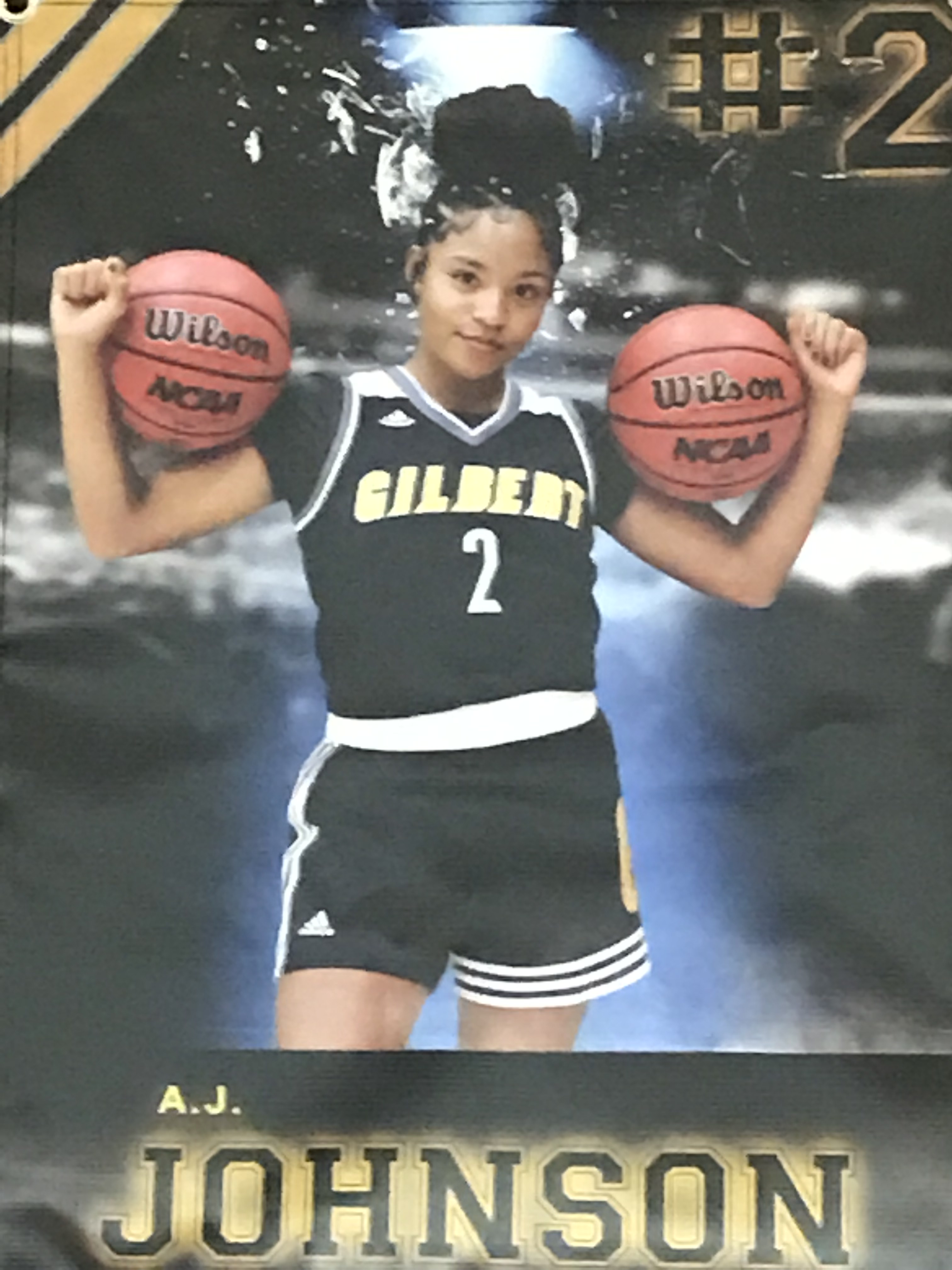
I am a student athlete and currently attend Gilbert High school. I also attend class at Chandler Gilbert Community College on Saturdays to fulfill my scholarship with the ACE program. In the future I hope to get another scholarship to continue my career at a university to play basketball. I would like to become an athletic trainer after college. I love playing basketball, working out, and finding other ways to better myself.
I am Alayna, a student athlete at Gilbert High School. I am on the starting line up for the varsity girls basketball team and I also play AAU basketball. I am currently enrolled at Chandler Gilbert Community College through a scholarship called the ACE program. To fulfill my scholarship I attend class on Saturdays when I am in school for Gilbert and during the summer I take courses in June throughout the week. I love to play basketball and workout in the gym on my free time. I plan to get an offer at a college to continue my academics and athletics. I hope to study and become and Athletic Trainer or a Physical Therapist. In the meantime, I am working to slowly find other niches to become the best Alayna I can be.
In English 102 I have learned many new things that would benefit my writing in the future. I have seen that attendance is a major game changer in how well a student will develop their work. Me personally, I’ve missed two days and I could tell it showed in my work because class participation and listening to lectures help with the depth of an assignment. I feel that listening to get a better understanding instead of a general understanding has helped a lot in my work. Class participation hits the little details and help get different perspectives on the assignment with different angles and that has helped me understand what type of work I need to produce. The simple exercises to break down the essays to get to the juicy parts and reveal the needed details has shifted and shaped my work.
Another key element I have noticed that determines how my essay turned out was time management. Time management to either sit down and do an essay in one day or to work on in a little everyday has showed the difference in my essays. I think when I worked on my essays a little everyday I had a greater chance to sit down and edit it and get everything I think on paper verses having chopped up sentences and areas that aren’t very understandable. Leading into the revision process, the more time available the more time is spent on catching the minor details that could make or break an A paper. I usually go through the word changes and add in or take out what’s needed. Next I’ll go back through and fix the explanations that need to be clear for the reader. Lastly, I’ll go back through and proofread to make sure the text makes sense.
While taking ENG102 ,in the ACE program, I have learned how to read, write and think at a college level. I’ve learned to break the text down and manipulated quotes to talk and correlate with other quotes to ground my comments I add in. But one skill I’d like to improve on is to get my thoughts onto paper. I have noticed that I leave out certain details and the reader is unclear of details that would put the pieces of my paper together.
Out of all three assignments that I have accomplished, I think I am most proud of the movie review because I learned that their were Black germans. Schools don’t teach this in the classroom and I felt very good and accomplished learning something on my own through a movie. Writing about how ‘Where Hands Touch’ presents good and bad scenes that set the theme, tone, and mood felt like less work and more of a pleasure because I was adamant about learning and writing about the setting. One writing element I would have liked to have more instruction and guidance on is focus, also clarity. I seemed to do really well with organization of my writing I just struggle on staying in tune with clarity and focus. I am very well with making connections in my writing and that can lead to changing focus of my writing and leave space to be unclear as a reader.
In my rhetorical analysis ‘Civil Rights Aren’t Always Civil’ I defined Aristotle’s three rhetorical proofs and gave examples from Malcolm X’s speech ‘Democracy is Hypocrisy’ to expose police brutality, the government, and the treatment of the Black race. I wrote, ‘With logos being the use of reasoning, Malcolm showed logic explaining why he spoke out to the Black community. “He defined land as the basis of freedom and equality, called for racial independence and a separate black identity, and advocated black self-defense” (Black). This example shows reasoning by laying out a plan for Blacks to follow to have basic freedoms and rights.’ In my movie review ‘Where The Sun Don’t Shine’ I examined the genre and analyzed how well producer and director Amma Asante put the movie together. I wrote, ‘The movie Where Hands Touch, directed and written by Amma Asante exposes German customs during the Holocaust that highlights both tragedy and biracial romance through the setting, dialogue, and appearance.’ In my visual text essay ‘The Black Woman & The Blue Background’ I reviewed the commentary a photographer made through an image. I wrote, ‘Naomi enhanced her imagination and determination to produce the image she created. The approach of her image she produced was shaped from motherhood because of her more enriched visual of art as she wants it.’
After taking ENG 102, I intend to use the writing skills gained from this course in my future academic/ professional endeavors. I will use organization skills for my future resume for jobs I would like to apply for. I would also use persuasive words and professional grammar in future papers or in an interview for a job. I can also use ethos, logos, and/ or pathos in situations such as arguments or debates for class that will help get my points across and gain credibility.
“You don’t scare Negroes today with no badge or no white skin or no white sheet or no white anything else” says Malcolm X who demonstrates “Democracy is Hypocrisy”(Vol 16). Malcolm X delivered this speech was the decade of the civil rights movement in the 60’s which held the frontiers of injustice for the Black community. This was the era where tension was high between White and Black communities of the United States. The Civil Rights era was the period of peaceful and violent protests against white police violence and brutality towards Blacks in America. A period when Whites and Blacks lived separately while Blacks fought to win their freedom by any means. Malcolm X effectively educated his audience of the blockage of Black freedoms and liberties by exposing the hypocrisy of the government in which his people lived in. Malcolm X’s passionate speech Democracy Is Hypocrisy presents exceptional points on injustice, police brutality, and racism towards Blacks through evidential and persuasive credentials showing how American democracy simply covered up problems.
“Malcolm X was an African-American Muslim leader and black nationalist activist whose militant advocacy of black pride, separatism, and armed self-defense foreshadowed the Black Power movement of the late 1960s” (Contemporary). In 1946, Malcolm took on the Muslamic fate while in prison to transform himself from a criminal as a stealer to a Black activist “questioning ‘civil rights’” because of his belief, protest against white supremacy and he was later labeled a traitor (Petin). “Malcolm X advocated black separatism, and he advised blacks to take up arms in self-defense against white hostility” which was the motive for his speech (Contemporary). Malcolm’s speech was about hypocrisy in the democratic government. Hypocrisy is claiming to have a standard but the standard is not held in the actions. The purpose for Malcolm’s speech of this ideas was caused by the “major thrust for racial integration” and Malcolm was pursuing racial separation do to his belief that civil rights in America was only “tokenism” (Encyclopedia). In other words, the practice of making only a symbolic effort to do a particular thing, especially by recruiting a small number of people from underrepresented groups in order to give the appearance of sexual or racial equality within a workforce. Malcolm’s combat tactic of Black separatism by fighting for Black freedom brought hatred from Black and White communities because both were concerned about a race war due to his tirades against “white devils” which labeled him “dangerous” (Contemporary). After Malcolm’s release from prison he became apart of the Nation of Islam and later split form it to “form his own more politically active group” creating the Organization of Afro-American Unity (Vol 16). He began to speak more about the Civil Rights Movement because Elijah Muhammad (the Islamic leader of N.O.I) wanted Malcolm to be excused from the N.O.I. (Nation of Islam) for “formidable threat to his (Elijah’s) power”, Malcolm brought tension and jealousy among the other muslim leaders, and brought uneasiness with some of the more cultish aspects of the Black Muslim faith” (Contemporary). Since Malcolm was a treat to the leaders in the N.O.I, Elijah Muhammad wanted Malcolm out of the Islamic alliance.
Although the date and occasion of the speech Democracy is Hypocrisy is unknown, the purpose of it is to not only show how Malcolm X was one of the most controversial leaders of this era, but to expose the lack of freedom and liberties the Blacks had in a democracy (Vol 16). He says, “If I’m wrong put me in jail, but if you can’t prove that in democracy is not hypocrisy then don’t put your hands on me” (Vol 16). In the 60s American government was a democracy although racism played a major role in providing little to no support for the Black community. The justice system was corrupt, police brutality was normalized, and the treatment of Blacks was beneath the treatment of Whites. Malcolm X talks about how the police “bust you all upside your mouth” and take the Negroes to court and accuse the Negro of attacking him while the Negro is the victim (Vol 16). This example shows the injustice and the nonexistent support for Negroes in a political system that exposes a voice that couldn’t be spoken in court by Blacks. While Malcolm X also talks about the suppression of Blacks his purpose is to draw attention to a “wider national audience” and leave his “opponents concerned” about the system built around the belittlement of Negroes. Malcolm says,“Twenty million black people in this country have been like boys in the white man’s house. He even calls us boys. Don’t care how big you get he calls you boy. You can be a professor; to him you’re just another boy” (Vol 16). This quote is supported by questions Malcolm ask as he mimics as a White man conversing with a Black man about the Black man’s name, history, his cut tongue, his language. He ends it “If you can’t do it for yourself, what the white man is doing for himself, don’t say you’re equal with the white man” (Vol 16). This shows the belittlement of Negroes in history and his lack of acknowledgement compared to the White man’s. Away a systematic government, built by the White man, advanced to manipulate the Negroes through livelihood, drunkenness, addiction, and nicotine. Malcolm speaks for the Black community saying, “We hate all of the vices that the white man has taught us to partake in and he accuses us of hating him because the white man knows you’re dangerous sober when you are drunk” (Vol 16). This quote proves a point on how the White man worries about the Black man understanding that the reality of the government isn’t democracy because it is hypocrisy. His typical audience, Malcolm spoke directly to the African American community as a leader for those who weren’t forming connections on how the government systematically worked to keep them suppressed.
From previous proofs, Malcolm X did a great job of persuading his audience with his use of reasoning, credibility, and emotion. With logos being the use of reasoning, Malcolm showed logic explaining why he spoke out to the Black community. “He defined land as the basis of freedom and equality, called for racial independence and a separate black identity, and advocated black self-defense” (Black). This example shows reasoning by laying out a plan for Blacks to follow to have basic freedoms and rights. Malcolm also built credibility exceptionally well by being redundant with his point of a victim being taken to court by the criminal when the criminal actually works for the government. “Records of police officers battering or even murdering unarmed black citizens have validated long standing complaints by African-Americans and changed the way the country views the issue of police brutality” (Political). From the start “Democracy is hypocrisy” together glued all of Malcolm’s points about the treatment and belittlement of the Negros together by using ethos and driving his audience’s emotion (Vol 16). Being repetitive with the term “boy” used by the whites as a name for the Blacks, Malcolm showed the pain of belittlement with White supremacy (Vol 16). With the well given speech on hypocrisy in the democratic government, Malcolm X’s evaluation of his experiences of the 60s such as police brutality and that inequality still appears in the current era.
Police brutality has had a corrosive effect on the Negro community for generations and has affected justice on a national level. “Police officers who might once have felt free to arrest or assault black citizens for no cause and explain it away later have been put on notice that the truth could be revealed by a cellphone video posted on the Internet” (Political). The difference between the current era compared to the 60s is that there are politicians who will stand up and challenge criminals who practice unconstitutional acts. “Police abuse or police brutality is the abuse of authority by the unwarranted infliction of excessive force by personnel involved in various aspects of law enforcement while in performance of their official duties” (Skaine). He goes on to say, “The excessive force is usually physical, but potentially, it is in the form of verbal attacks and psychological intimidation” by officers that stand and represent the law by government (Skaine). In Obama’s time of presidency, he was accused of “encouraging ‘lawlessness’” and violence against police officers by acknowledging that the country needed to take both police brutality and the ‘Black Lives Matter’ protest movement seriously” (Political). He continues, “this movement focuses on the irrefutable fact that black citizens are far more likely than whites to die at the hands of the police. The more the country ignores that truth, the greater the civic discord that will flow from it” (Political). This quote exposes the reality that society is slowly disregarding police brutality and the Black Lives Matter movement. Police are accusing Negroes of crimes they didn’t commit which is a fraction of the lifestyle in the 60s compared to life today. Life today compared to then is not even a comparison but it is a trend that continues to happen but not as brutal as the 60s.
Racism towards Blacks, police brutality, and injustice are a series of events that are derived to the audience using emotion, logic, and credibility in the speech Democracy Is Hypocrisy given by Malcolm X. Ultimately, this analysis reveals the reality of history repeating itself in a cycle but the cycle is not always the exact same.The point conveyed in this analysis is important to understand the context of current events compared to historical events. Readers should look at current actions involving racism to predict future issues facing society.
SPEECH-
UNKNOWN You don’t scare Negroes today with no badge or no white skin or no white sheet or no white anything else. The police the same way; they put their club upside your head and then turn around and accuse you of attacking them. Every case of police brutality against a Negro follows the same pattern. They attack you, bust you all upside your mouth and then take you to court and charge you with assault. What kind of democracy is that? What kind of freedom is that? What kind of social or political system is it when a black man has no voice in court? Has no nothing on his side other than what the white man chooses to give you? My brothers and sisters we have to put a stop to this and it will never be stopped until we stop it ourselves. They attack the victim and then the criminal who attacked the victim accuses the victim of attacking him. This is American justice. This is American democracy, and those of you who are familiar with it know that in American democracy is hypocrisy. Now if I’m wrong put me in jail, but if you can’t prove that in democracy is not hypocrisy then don’t put your hands on me. Democracy is hypocrisy. If democracy means freedom why aren’t our people free? If democracy means justice why don’t we have justice? If democracy means equality why don’t we have equality? Twenty million black people in this country have been like boys in the white man’s house. He even calls us boys. Don’t care how big you get he calls you boy. You can be a professor; to him you’re just another boy. I heard him calling the Ralph Bunch. Why he’s a good old boy. Who are you? You don’t know. Don’t tell me Negro, that’s nothing. What were you before the white man named you a Negro? And where were you? And what did you have? What was yours? What language did you speak then? What was your name? It couldn’t have been Smith or Jones or Blunch or Powell. That wasn’t your name. They don’t have those kind of names where you and I came from.No. What was your name? And why don’t you now know what your name was then? Where did it go? Where did you lose it? Who took it? And how did he take it? What tongue did you speak? How did the man take your tongue? Where is your history? How did the man wipe out your history?How did the man, what did the man do to make you as dumb as you are right now? And if we can’t do it we should hush our mouth. If you can’t do it for yourself, what the white man is doing for himself, don’t say you’re equal with the white man. If you can’t set up a factory like he sets up a factory don’t talk that old equality talk. Get off the welfare. Get out of that compensation line. Be a man. Earn what you need for your own family.Then your family respects you. They’re proud to say that’s my father. She’s proud to say that’s my husband. Father means you’re taking care of those children. Just because you made them that don’t mean you’re a father. Anybody can make a baby, but anybody can’t take care of them. Anybody can go and get a woman, but anybody can’t take care of a woman. Yes, we hate livingness. We hate drunkenness. We hate dope addiction. We hate nicotine. We hate all of the vices that the white man has taught us to partake in and he accuses us of hating him. Why, because the white man knows you’re more dangerous sober when you are drunk. Yes, you are more dangerous sober when you are drunk. He’s not worrying about no dancing, singing, clowning Negro. He’s worried about you when you stop dancing, when you stop singing, when you stop clowning and start thinking. Then he gets worried and you should keep him worried.
08:20 [sil.]
08:25 UNKNOWN And now you know you need someone to teach you to respect your woman. You say well what about the white woman. No, you’ve been respecting her. Every time you see a Negro man he got his hat off showing his teeth to some fair skinned white woman.
08:40[sil.]
08:55 UNKNOWN And the mistake that you and I have made is leaving our women unprotected. Anybody can get to her. Anybody can abuse her. Any old white man can come and pat a black woman. Can he not? And we are teaching the white man keep his hands and his eyes of our women.
Works Cited
“Black Nationalism.” The Civil Rights Movement in America: From Black Nationalism to the Women’s Political Council, edited by Peter B. Levy, Greenwood, 2015, pp. 34-37. Movements of the American Mosaic. Gale Virtual Reference Library. Accessed 6 Apr. 2019.
“Malcolm X.” Contemporary Heroes and Heroines, Vol. 2, Gale, 1992. Biography In Context. Accessed 23 March. 2019.
“Malcolm X.” Encyclopedia of World Biography, 2nd ed., vol. 10, Gale, 2004, pp.165-166. Gale Virtual Reference Library. Accessd 6 April. 2019.
“Malcolm X.” Volume 16. Prod. Educational Video Group. 2014. American History in Video Database. Web. Accessed 6 April. 2019.
Petin, Mika’il A. “Malcolm X.” Jim Crow: A Historical Encyclopedia of the American Mosaic, edited by Nikki L.M. Brown and Barry M. Stentiford, Greenwood, 2014, pp.261-267. Gale Virtual Reference Library. Accessed 6 April. 2019.
“Political Lies About Police Brutality.” Oct 27 2015. Web. ProQuest. 6 Apr. 2019.
Skaine, Rosemarie. “Police, Abuse by.” Abuse: An Encyclopedia of Causes, Consequences, and Treatments, edited by Rosemarie Skaine, Greenwood, 2015, pp. 211-214. Gale Virtual Reference Library. Accessed 7 Apr. 2019.
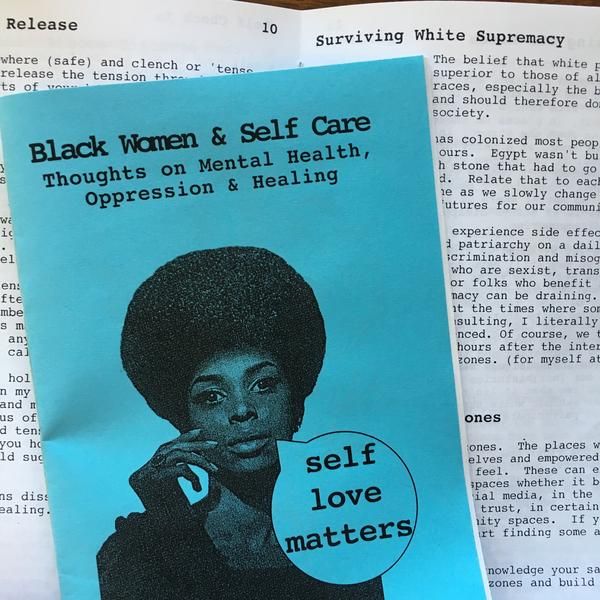
Fig.1. Naomi Moyer, Black Women & Self Care: Thoughts on Mental Health, Oppression & Healing, 2015.
“A mere five minutes of the daily news suggests that we still have a significant racial divide in our country”(Marion). Civil acts such as protests and marches, today, have shown that racism and discrimination have not ended with the Civil Rights Movement of the 1960s. Stressing the “significance of demanding justice and condemning discrimination in order to end modern racism”(Marion). In order to make a just society reality, encouragement for beliefs of what is right must occur and political and social pressures must remain complete the labor of those who fought throughout history. There is a difference between recognizing and taking action to repair injustice from those who fall into a “state of complacency in the wake of justice”(Marion). Unlike any other ethnic groups, in the world African Americans have a particular history of over two hundred years of chattel slavery, desegregation and live as a community. In the United States with laws on the books such as the Constitution consider blacks as three-fifths of a man, the need for the 13th Amendment, even the need for the Emancipation Proclamation, African Americans had to challenge government to grant freedom. African Americans had to asked those in power to be free. The constant systematic training of being told that African American were only slaves, equivalent to cattle and property and not allowed to improve and explore self love. In Naomi M. Moyer’s photo “Black Women & Self Care: Thoughts on Mental Health, Oppression & healing” she exposes the effects of anxiety while including with tips on self love for African American women.
Naomi M. Moyer is a writer and self taught artist who has used motherhood to shape her writing. “To create takes time, and motherhood has changed my relationship with time because it is limited”(Shedoesthecity). Being a mother did not make her a time management expert, but it certainly taught her how to use, and appreciate time. Through pregnancy and the establishment of Naomi’s new creation of herself, she emphasized her new self in Fig. 1 by celebrating those who love other black people through her picture by having the text box saying “self love matters” (Moyer). This text box emphasizes the love black people have for other black people to empower their own race.
Naomi enhanced her imagination and determination to produce the image she created. The approach of her image she produced was shaped from motherhood because of her more enriched visual of art as she wants it.
The writer and self taught artist translates her character through her writing and pictures. Naomi says she is slowly regrounding herself and simple things make her happy but she is far from being a simple person. She claims her creativity comes from the fact that she is a thinker. Other characteristics she has is being a lover and a dreamer but she also worries. She herself is “on the path of healing” (Shedoesthecity). These characteristics seem to absorb onto the paper because she shows herself through her pictures.
“It would be nice to see more Black authors and illustrators telling their own stories” (Shedoesthecity). Naomi believes that Black characters should not always have to be about their history but characters should be more diverse and have more melanin. Naomi’s vision is to see more Black characters in everyday images because people need to tell their own stories. Her picture demonstrates more of what she wants to see because it shows the more magical realism with a woman of color.
In Fig.1 image “Black Women & Self Care: Thoughts on Mental Health, Oppression & healing”, the Black woman with the blue background makes a statement. The Black woman has an afro that shows the pride of her natural hair. She holds her head up just like her hair stands to show strength and power. The way her eyes are set forward shows her stability but also her innocence while the background compliments it. The color blue in the background symbolizes the depth in this woman’s confidence. Her face is turned ever so slightly to the right with a text box saying “self love matters” (Moyer). The way her hand rests on her face corresponds with her statement by showing that her natural self needs love. “Often Black histories focus on status and power or how Black folks assimilated” but Naomi “wanted to take the lens and refocus on histories that involve women who are often the roux holding communities together” (Shedoesthecity).
One review on Naomi’s style shows profiling of individuals with informative overlooks on forces in the black community. Her pictures emphasize the “links between Black struggles and triumphs from past to present” (Ohaegbu). Naomi’s photos idolize the struggles of oppressions on Blacks. The acknowledgement of racism shows action through injustices. Her art favors the focus on fighting against them. Self determination through her photos emphasizing self love is “simply the right to thrive while being Black” (Ohaegbu).
Another review on Naomi’s message through her photos believes there is importance in her creations because it is of non-fiction work. The dedication to the communities Naomi targets with transnationalism is of Black history for the present. In this instance the review announces the focus of the core in Blacks to shine light on those that have a voice to facilitate strength. With the photo, “Black Women & Self Care: Thoughts on Mental Health, Oppression & healing”, Naomi shows and embraces the features of bold and stylized eye-catching articulation to send a message she wants viewers to receive (Magyarody).
Naomi has brought up a very unique conclusion about the relationship between the Oppressor and the Oppressed through presenting beauty in her photo “Black Women & Self Care: Thoughts on Mental Health, Oppression & healing” (Naomi). She eludes to the concept of self -love and self -determination. This presents the idea the oppressed should love themselves and practice self- determination. In conclusion regarding this relationship between the Oppressor and the Oppressed. Does a rape victim ask the purportrator for freedom? Does the victim of domestic violence ask the suspect to give justice? If not, why does the oppressed need permission from their oppressor to love themselves and seek justice? Why must African-Americans beg, march and protest for freedom and justice? In no other situation in history does the oppressed ask the oppressor for justice for more than two hundred years. The abused and oppressed having to beg their oppressor through examples of public non violent demonstrations as marching, refusing the give up a seat on a bus or restaurant, or delivering public speech in Washington DC challenging governmental written laws of segregation. Justice is fought over and taken by bloodshed and the loss of life. The African American struggle will only continue if it requires begging the Oppressor for freedom. Simply the right to thrive while being Black will only be earned by taking justice through bloodshed and loss of life. Otherwise the oppressor will continue to find way to keep its foot on the neck of the oppressed.
Works Cited
Magyarody, Katherine. “MOYER, Naomi M.: Black Women Who Dared.” School LibraryJournal, Sept. 208, p.140. Academic OneFile. Accessed 22 Feb. 2019.
Marion, Grace. “Black History month opening ceremony.” UWIRE text, 1 Feb. 2019, p. 1. Academic OneFile. Accessed 22 Feb. 2019.
Moyer, Naomi M. “Black Women & Self Care: Thoughts On Mental Health, Oppression & Healing.” Elastiquedesigns, 2015. Accessed 23 Feb. 2019.
Ohaegbu, Chimedum. “BLACK WOMEN WHO DARED.” This Magazine, Sept.-Oct. 2018, p. 51. Academic OneFile. Accessed 22 Feb. 2019.
“The Story Behind Naomi M Moyer’s ‘Black Women Who Dared’.” Shedoesthecity, 7 Nov. 2018. Accessed 23 Feb. 2019.
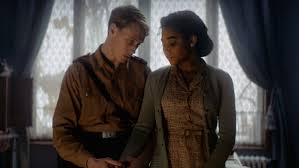
“There are days when you wonder what your role is in this country and what your future is in it”(Where). Between 1939 and 1945, World War II was going on and Hitler was the dictator of Germany. During this time the women worked in shops to help supply for the war, while the men worked for the government as soldiers. The gloomy clouds in the skys during the hardship of the war resemble the washed out clothing the citizens wore. The focus of this review is to expand on the soldiers that stayed in Germany to search for the people the immigrants that didn’t fit the perfect utopia Hitler had in mind. Any person that did not love Germany, didn’t have blonde hair and blue eyes went against Hitler’s vision of a person (Gbadamosi). Every person needed to have some type of identification of being German and if not, they were taken away. Many know Hitler for taking Jews, using them for chemical test, starving them, and sending them to concentration camps (which separated families) but many don’t know that Afro-Germans were treated the same (Gbadamosi). Afro-Germans are “biracial people that are descendants of African and German blood” (Where). The Afro-Germans were known as “Hitler’s problem” or “Rhineland bastards” because often their “fathers were African descendants and often absent”(Gbadamosi). The main point of this movie is to expose how Hitler handled the biracial people reproducing themselves and making more; he sterilized them and only few survived the brutal treatment they received. The movie Where Hands Touch, directed and written by Amma Asante exposes German customs during the Holocaust that highlights both tragedty and biracial romance through the setting, dialogue, and appearance.
The movie Where Hands Touch is a romance, drama, and war movie, written and directed by Amma Asante. This movie tells a story about a family with an Afro- German background. Leyna is a colored German. She lives with her mother and her younger brother (Cowin) but both of the children’s fathers are absent. Leyna’s mother and brother are both strictly German. Leyna and her family live in Rhineland, Germany but then move to Berlin so they’re “invisible”, as Leyna’s mother once said (Where). Once the family moved they ran into trouble with the soldiers becoming more harsh, as they did back at home. They were hunting down the Jews like prey that were hidden away. It was very disturbing to see how one group wants to cause genocide on another group because they don’t fit in with the social appearance of blonde hair and blue eyes. Once they came across the Afro-Germans, they were given a hard time because the mothers were sinners for making a black child according to Hitler. Citizens had to have papers to verify that they were German. If they did not have verification and they were caught, they would be thrown onto a shuttle going to a concentration camp as Leyna did. Leyna had false papers which stated she was a German and she was sterilized. She received these papers from her mother’s brother in law (that had access to government papers). Later a soldier burned them because the one paper was the identity of Leyna and could cost her her life.
In the meantime, Leyna starts a new school in Berlin but is pulled out as most Afro-Germans were. This pushed Leyna to work with her mother in the factory. The setting that presents Leyna walking through the streets with her mother and experiencing the soldiers embarrassing minorities is devastating because the German soldiers laughat their own hasing. As the movie strolls along, a German soldier caught Leyna’s eye and she caught his. While this is going on, Leyna isn’t sterilized and is not supposed to have any relations with the German males, but she did with the soldier (Lutz). This is against the rules of sterilization. It took a lot of courage for Leyna to take a stand and say she did not want to sign the papers because she is of German blood, but she very calmly signed the papers to avoid any further harm. This part of the film was very touching because it shows how Leyna’s identity was stripped from her when she has to sign papers. It was very beautiful how Leyna and Lutz fall in love and Leyna was impregnated whether German law accept it or not. Not too long after she got pregnant Lutz was sent out on a mission like the rest of the soldiers are and this set a mood of devastation because Leyna was heartbroken after hearing the news. She knew how much of a struggle it would be to safely raise her child on her own.
Later on, Leyna and her mother are walking to work one day and they are stopped by the soldiers and asked for papers. At this point, Leyna doesn’t have any because the soldier burned them. The soldier scolds Leyna’s mother for having a black German and took her away because Leyna’s mother wants to spare Leyna. Leyna then went home and took her younger brother to their aunt’s house for safekeeping and Leyna lived on her own and tried to work. But since the day her mother was taken the soldiers became more harsh but it reveals the independency in Leyna.
Later on, Leyna was caught and taken to a concentration camp just as the Jews were. She grows bigger and bigger as the months pass then came the day she noticed a soldier. The same soldier that caught her eye once before like a kid in a candy store. Lutz did what he could to protect Leyna while she is in the same concentration camp as he is. He gave her more food and gave her more clothes. All along Lutz’s father is stationed at the same concentration camp and notices how Lutz is taking care of her. The way Lutz goes on to protect Leyna is very heartwarming because it proves that race, color or looks, do not determine the goodness and loving character of a person.
As the movie slowly came to an end, the war was coming closer and closer to an end the Germans had to do something to the people in the concentration camps. The soldiers began shooting the people one by one. Lutz wants to save Leyna and the baby from dying. He wants to run away as a typical romance movie would usually do because of the “Happily Ever After” scenario. But Lutz’s father warned him what would happen if he continued on with this type of thinking. Lutz finally found Leyna and Lutz was shot, as expected, by his father. Shot dead right in front of Leyna. This scene was a very emotional scene to watch because it makes the viewer feel as if all hope is lost for Leyna. The only person she had left as a protector and friend was taken from her. All because he cared for someone who was thought to not live up to the “German standards”(Where).
In conclusion, this move is very good and does an exceptional job of depicting how Hitler treated those who did not live up to his expectations of human value. This movie highlights how biracial Germans reproducing was forbidden and how Hitler sterilized them, leaving few to survive his brutal treatment. One of the best parts of this movie was when Amma exposed Hitler on his systematic region with wanting pale skin, blonde hair, and blue eyes. This part shows how Hitler’s mental manipulation of an entire country did not go unnoticed. The setting in Germany really compliments the message Amma gave through Leyna. Leyna continuously showed courage and did what she had to do to survive with her family close or far. This movie is an eye catcher to those that are interested in untold stories about African descendants. This movie aims at those looking forward to be moved by the bravery of young woman looking to make a life for herself and her family and overcome the challenge of simply being her.