
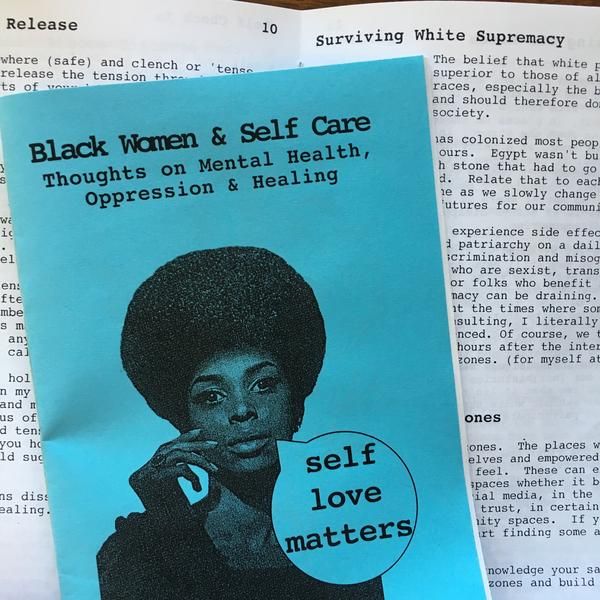
Fig.1. Naomi Moyer, Black Women & Self Care: Thoughts on Mental Health, Oppression & Healing, 2015.
“A mere five minutes of the daily news suggests that we still have a significant racial divide in our country”(Marion). Civil acts such as protests and marches, today, have shown that racism and discrimination have not ended with the Civil Rights Movement of the 1960s. Stressing the “significance of demanding justice and condemning discrimination in order to end modern racism”(Marion). In order to make a just society reality, encouragement for beliefs of what is right must occur and political and social pressures must remain complete the labor of those who fought throughout history. There is a difference between recognizing and taking action to repair injustice from those who fall into a “state of complacency in the wake of justice”(Marion). Unlike any other ethnic groups, in the world African Americans have a particular history of over two hundred years of chattel slavery, desegregation and live as a community. In the United States with laws on the books such as the Constitution consider blacks as three-fifths of a man, the need for the 13th Amendment, even the need for the Emancipation Proclamation, African Americans had to challenge government to grant freedom. African Americans had to asked those in power to be free. The constant systematic training of being told that African American were only slaves, equivalent to cattle and property and not allowed to improve and explore self love. In Naomi M. Moyer’s photo “Black Women & Self Care: Thoughts on Mental Health, Oppression & healing” she exposes the effects of anxiety while including with tips on self love for African American women.
Naomi M. Moyer is a writer and self taught artist who has used motherhood to shape her writing. “To create takes time, and motherhood has changed my relationship with time because it is limited”(Shedoesthecity). Being a mother did not make her a time management expert, but it certainly taught her how to use, and appreciate time. Through pregnancy and the establishment of Naomi’s new creation of herself, she emphasized her new self in Fig. 1 by celebrating those who love other black people through her picture by having the text box saying “self love matters” (Moyer). This text box emphasizes the love black people have for other black people to empower their own race.
Naomi enhanced her imagination and determination to produce the image she created. The approach of her image she produced was shaped from motherhood because of her more enriched visual of art as she wants it.
The writer and self taught artist translates her character through her writing and pictures. Naomi says she is slowly regrounding herself and simple things make her happy but she is far from being a simple person. She claims her creativity comes from the fact that she is a thinker. Other characteristics she has is being a lover and a dreamer but she also worries. She herself is “on the path of healing” (Shedoesthecity). These characteristics seem to absorb onto the paper because she shows herself through her pictures.
“It would be nice to see more Black authors and illustrators telling their own stories” (Shedoesthecity). Naomi believes that Black characters should not always have to be about their history but characters should be more diverse and have more melanin. Naomi’s vision is to see more Black characters in everyday images because people need to tell their own stories. Her picture demonstrates more of what she wants to see because it shows the more magical realism with a woman of color.
In Fig.1 image “Black Women & Self Care: Thoughts on Mental Health, Oppression & healing”, the Black woman with the blue background makes a statement. The Black woman has an afro that shows the pride of her natural hair. She holds her head up just like her hair stands to show strength and power. The way her eyes are set forward shows her stability but also her innocence while the background compliments it. The color blue in the background symbolizes the depth in this woman’s confidence. Her face is turned ever so slightly to the right with a text box saying “self love matters” (Moyer). The way her hand rests on her face corresponds with her statement by showing that her natural self needs love. “Often Black histories focus on status and power or how Black folks assimilated” but Naomi “wanted to take the lens and refocus on histories that involve women who are often the roux holding communities together” (Shedoesthecity).
One review on Naomi’s style shows profiling of individuals with informative overlooks on forces in the black community. Her pictures emphasize the “links between Black struggles and triumphs from past to present” (Ohaegbu). Naomi’s photos idolize the struggles of oppressions on Blacks. The acknowledgement of racism shows action through injustices. Her art favors the focus on fighting against them. Self determination through her photos emphasizing self love is “simply the right to thrive while being Black” (Ohaegbu).
Another review on Naomi’s message through her photos believes there is importance in her creations because it is of non-fiction work. The dedication to the communities Naomi targets with transnationalism is of Black history for the present. In this instance the review announces the focus of the core in Blacks to shine light on those that have a voice to facilitate strength. With the photo, “Black Women & Self Care: Thoughts on Mental Health, Oppression & healing”, Naomi shows and embraces the features of bold and stylized eye-catching articulation to send a message she wants viewers to receive (Magyarody).
Naomi has brought up a very unique conclusion about the relationship between the Oppressor and the Oppressed through presenting beauty in her photo “Black Women & Self Care: Thoughts on Mental Health, Oppression & healing” (Naomi). She eludes to the concept of self -love and self -determination. This presents the idea the oppressed should love themselves and practice self- determination. In conclusion regarding this relationship between the Oppressor and the Oppressed. Does a rape victim ask the purportrator for freedom? Does the victim of domestic violence ask the suspect to give justice? If not, why does the oppressed need permission from their oppressor to love themselves and seek justice? Why must African-Americans beg, march and protest for freedom and justice? In no other situation in history does the oppressed ask the oppressor for justice for more than two hundred years. The abused and oppressed having to beg their oppressor through examples of public non violent demonstrations as marching, refusing the give up a seat on a bus or restaurant, or delivering public speech in Washington DC challenging governmental written laws of segregation. Justice is fought over and taken by bloodshed and the loss of life. The African American struggle will only continue if it requires begging the Oppressor for freedom. Simply the right to thrive while being Black will only be earned by taking justice through bloodshed and loss of life. Otherwise the oppressor will continue to find way to keep its foot on the neck of the oppressed.
Works Cited
Magyarody, Katherine. “MOYER, Naomi M.: Black Women Who Dared.” School Library Journal, Sept. 208, p.140. Academic OneFile. Accessed 22 Feb. 2019.
Marion, Grace. “Black History month opening ceremony.” UWIRE text, 1 Feb. 2019, p. 1. Academic OneFile. Accessed 22 Feb. 2019.
Moyer, Naomi M. “Black Women & Self Care: Thoughts On Mental Health, Oppression & Healing.” Elastiquedesigns, 2015. Accessed 23 Feb. 2019.
Ohaegbu, Chimedum. “BLACK WOMEN WHO DARED.” This Magazine, Sept.-Oct. 2018, p. 51. Academic OneFile. Accessed 22 Feb. 2019.
“The Story Behind Naomi M Moyer’s ‘Black Women Who Dared’.” Shedoesthecity, 7 Nov. 2018. Accessed 23 Feb. 2019.

